









By James Spriet
EW/ISR SME | Mission Systems Lead
10 Feb 2026
Darkness Over France
Occupied France. October 1944.
Author’s note* The opening scene is historical fiction. It’s built from the era, not from one documented engagement.

Figure 1. WWII Nighttime Air Raids
The Junkers Ju 188 crossed into Allied airspace at 22,000 feet, running without lights.
The pilot kept his eyes moving the way he had for thirty-seven missions. Instrument panel, glowing soft red to preserve his night vision. Blackness outside, absolute and total. Instrument panel again. Airspeed 380 kilometers per hour. Altitude steady. The twin Jumo 213 engines turning in perfect synchronization, that low harmonic thrum he had learned to read the way a doctor reads a pulse. Any change in that sound meant trouble. Tonight there was no change.
The mission was complete. Eight 250-kilogram bombs were released over an American supply depot near Reims. He had not seen them hit. He never did. The bombs fell into darkness, and the darkness swallowed them, and then there was nothing but the long flight home. The slow unwinding of the muscles in his neck and shoulders. The quiet satisfaction of another mission survived.
The night fighters never came. That was the truth that had kept him alive. Allied fighters needed searchlights and flak to find you. They needed ground controllers to vector them in. If you flew high and quiet, if you stayed away from the moon, if you trusted the darkness, you were a ghost. Invisible. Untouchable. Sixty-two men in his squadron had died since the invasion, and every single one of them had been killed by flak or daylight Mustangs. Not one had been lost to a night fighter. Not one.
The pilot checked his watch. 02:47. Forty minutes to the Rhine. Another twenty to Mainz. Debriefing would take an hour. Then coffee, if they had any. A cot. Six hours of sleep before they did it all again.
In four days, he would have enough leave to see his wife in Stuttgart if the trains were running. If the RAF had not bombed the tracks again. He had not seen her in eleven weeks. He tried to picture her face and found that he couldn’t, not clearly, and that bothered him more than he wanted to admit.
Behind him, his navigator was bent over his charts, plotting their route through the safe corridors. In the rear gondola, twenty feet back, his gunner was staring into nothing, hands on the machine gun, watching for threats that had never come in thirty-seven missions.
None of them felt the thing rising toward them from below.
It came up out of the darkness like something that had been waiting there all along.
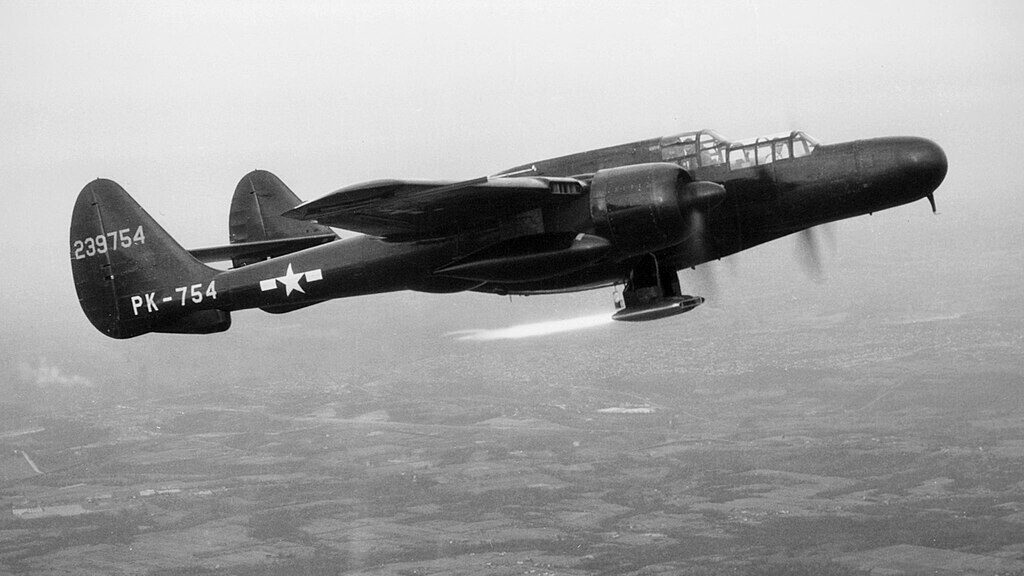
Figure 2. Northrop P-61 Black Widow
The P-61 Black Widow was the largest fighter aircraft the United States had ever built. Sixty-six feet from wingtip to wingtip. Forty-nine feet from nose to tail. Twin Pratt & Whitney R-2800 engines, the same engines that powered the Thunderbolt and the Hellcat, but the Black Widow carried two of them. Twin booms swept back from the engine nacelles and joined at a horizontal stabilizer, giving the aircraft a strange, predatory silhouette. From certain angles, it looked less like an airplane than like something that crawled.
The airframe was painted gloss black from nose to tail, a deep lacquer finish that searchlight tests had proven nearly invisible against the night sky. Just black on black, a shape that did not reflect light so much as drink it. Against the stars, the Black Widow was a void. A place where the sky stopped.
Four M2 20mm cannon sat in the belly, aimed straight ahead. Two hundred rounds per gun. At close range, a two-second burst could tear a bomber apart.
In the forward cockpit, the pilot watched the darkness ahead and breathed slowly. Five kills. Eleven nights just like this one. The nervousness had gone away around kill number four. Now there was only the procedure. Trust the radar. Trust your operator. Close the range. Take the shot. Go home.
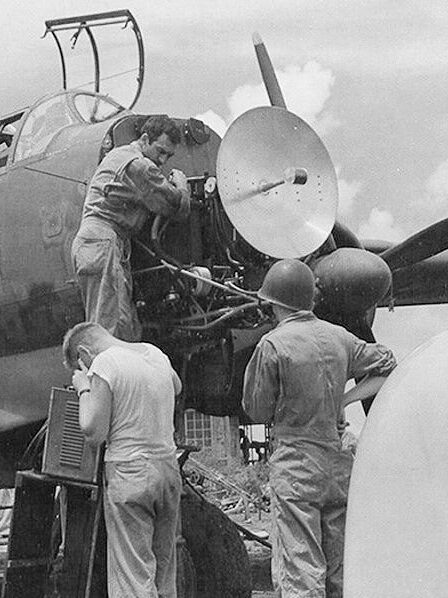
Behind him, separated by a short tunnel and an armored bulkhead, his radar operator sat in a cramped compartment lit only by the green glow of the scope. The SCR-720 was sweeping the sky with invisible light, its dish spinning 360 times per minute behind the fiberglass nose, painting everything within five miles.
“Contact.” The radar operator’s voice was flat and calm in the pilot’s headphones. “Bearing zero-four-five. Range four miles. Angels twenty-two. Single target. Heading northeast at about two-forty.”
Going home, the pilot thought. They’re going home.
He adjusted his heading ten degrees right and pulled back on the yoke, beginning a slow climb. No rush. The Junkers was slower than he was. The geometry was simple math. Rise from below and behind. Stay in the blind spot beneath the tail where the gunner couldn’t see, close to three hundred feet. Take the shot.
“Three miles. He’s straight and level. No evasive. He doesn’t know we’re here.”
The Black Widow climbed to 20,000 feet. The pilot kept his eyes on the darkness ahead, waiting for the first glimpse of exhaust flame.
“Two miles. Closure rate about one-fifty. Still no reaction.”
There. Two pale blue rings floating in the black, barely visible, flickering slightly as the German pilot adjusted his throttles. The bomber was maybe a thousand feet above him now, cruising fat and happy, the crew probably thinking about coffee and letters from home.
The pilot continued to climb, bleeding off closure rate, matching speed. The Black Widow’s engines were throttled back to reduce the exhaust glow. The props were turning just fast enough to hold position.
“Fifteen hundred feet. You’re below and behind. You’re in his blind spot.”
The pilot could see the Junkers’ silhouette now. Wings. Twin tails. The long fuselage with the greenhouse canopy where the pilot sat. The rear gondola, where the gunner was stationed, the barrel of his weapon pointed at the empty sky somewhere off to the left.
He made a small correction, sliding right to center on the fuselage.
“One thousand feet.”
The gunsight drifted across the bomber’s belly and settled just behind the wing root. The fuel tanks were there. So were the crew.
“Five hundred feet.”
The pilot could hear his own breathing in his mask. Slow. Steady. His finger rested on the trigger, no pressure yet, just contact.
“Three hundred feet.”
He squeezed.
The cannon made a sound like the sky ripping open.
20mm shells crossed three hundred feet of darkness in a fraction of a heartbeat. The rear gondola exploded in a flash of fire and a shower of fragmented metal. The gunner was there, and then he was simply gone, erased between one second and the next, and the difference between those two states was less than the time it takes to blink.
In the Junkers’ cockpit, the pilot’s hands were already moving before his brain understood why. The aircraft was shuddering, bucking, something hammering against the fuselage behind him. He heard his navigator scream. He shoved the yoke forward and kicked the rudder, throwing the bomber into a dive, reaching for clouds that were too far below to matter.
Tracers streaked past the canopy. Bright orange lines that seemed to float in the darkness, curving gently, impossibly beautiful. He had never seen an enemy aircraft at night. He still couldn’t see one. There was only fire coming out of the void, death arriving from empty sky, something that should not exist reaching out to kill him.
He had time for one clear thought: They learned to see in the dark.
Then the second burst found the fuel tank, and the left wing became a sheet of white fire, and the thought was the last one he ever had.
Six kilometers below, a farmer stood at his window.
He had not slept well since the occupation began. Four years of German boots in his village. Four years of looking down when the patrols passed. His son had joined the Resistance two years ago and stopped writing six months later. The farmer did not know if his boy was alive or dead. Most nights, he stood at this window and watched the darkness, trying not to think about it.
He saw the fire arc across the sky. Bright enough to cast shadows. Bright enough to light the fields for a half-second like a photographer’s flash. A burning aircraft, tumbling, pieces breaking away as it fell.
He watched it until it disappeared below the treeline. He heard the impact a few seconds later. A distant crump, like thunder rolling in from far away.
German aircraft. The shape had been wrong for American.
He did not cross himself. He did not pray for the crew.
He went back to bed and slept better than he had in months.
Ten miles west, the Black Widow climbed back to altitude.
The pilot leveled off at 23,000 feet and let out a long breath. His hands were steady on the yoke. His pulse was somewhere around seventy. Six kills now. It should feel like something. It didn’t. It felt like paperwork. It felt like maintenance. You found them, you killed them, you went home and did it again tomorrow.
Behind him, the radar operator was already back on the scope, watching the sweep paint the darkness.
“Scope is clear. No other contacts.”
“Copy. Let’s hold this altitude for another twenty minutes, then head home.”
“Roger.”
Silence in the cockpit. The engines droned. The stars wheeled slowly overhead.
In the nose cone, behind the fiberglass radome, the dish was still spinning. Three hundred sixty revolutions per minute, steady as a heartbeat, sweeping the sky with invisible light. The motor that drove it was a small thing, precise and tireless, humming away. It had been running for six hours. It would run for six more. It had never failed the aircrew.
Somewhere out there, another German bomber was crossing into Allied airspace. Another crew trusting the darkness. Another pilot thinking about letters from home.
The Black Widow turned south and disappeared against the stars.
That motor was built by a small team working in an attic in San Carlos, California.
This is the story of how it got there.
The Problem
September 1940. A British scientific delegation arrived in Washington carrying a black metal box that would change the course of the war.
Inside was the cavity magnetron. A device no larger than a man’s fist that could generate microwave energy at power levels American physicists had declared impossible. The British were bleeding. The Luftwaffe was burning London. They needed American industrial capacity to turn their laboratory miracle into weapons, and they were willing to trade their greatest secret to get it.
The Americans took one look at the magnetron and understood immediately what it meant.
Radar had already proven itself. The British had used it to win the Battle of Britain, detecting German bomber formations while they were still over the Channel. But those radar sets were enormous. Fixed installations with antennas the size of billboards. Thousands of tons of equipment bolted to hillsides and rooftops. You could not put them in an airplane. The physics would not allow it.
The magnetron changed the physics.
Microwaves meant shorter wavelengths. Shorter wavelengths meant smaller antennas. Suddenly you could fit a radar set in the nose of a fighter aircraft. Suddenly a pilot could carry his own eyes into the night.
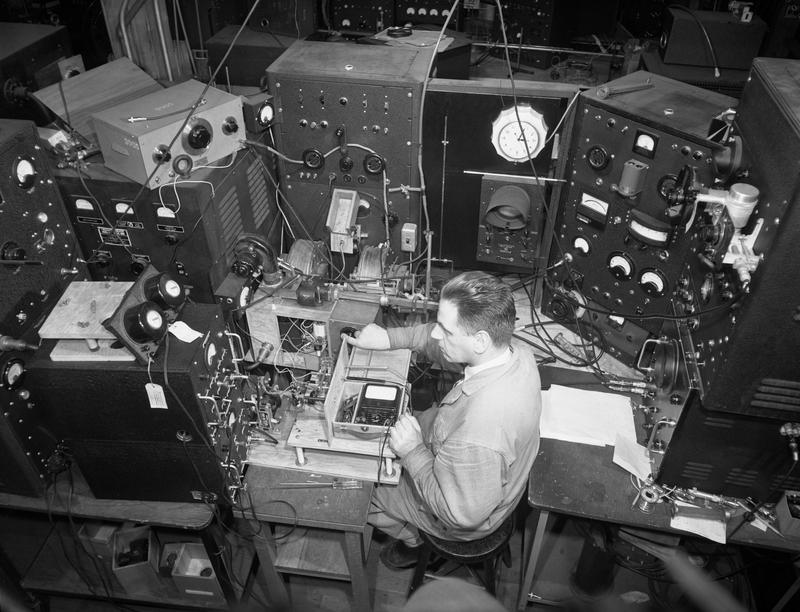
Magnetron Tests
MIT established the Radiation Laboratory in November 1940 with a single classified mission: weaponize the magnetron. The best physicists and engineers in the country converged on Cambridge. They worked around the clock. They slept on cots in their offices. Within months, they had prototypes that could detect aircraft at five miles and track them down to 250 feet. Resolution sharp enough to guide a firing solution. For the first time in history, a pilot could find and kill his enemy in complete darkness.
But the prototype had a problem that nobody could solve.
A radar antenna is like a flashlight. Point it at something, and you can see it. Point it somewhere else, and you are blind. To search for targets, you have to sweep the beam back and forth, up and down, systematically covering every possible angle where an enemy might be hiding.
The RadLab engineers solved this with brute mechanical force. They mounted a 29-inch parabolic dish on a motorized gimbal and set it spinning at 360 revolutions per minute. While spinning, the dish tilted continuously from 50 degrees above the horizon to 30 degrees below, nodding up and down at 30 degrees per second. The result was a helical scan pattern that painted the sky in overlapping stripes. Six complete sweeps per second. The radar beam interrogated every cubic meter of airspace.
The physics were elegant. The engineering was nearly impossible.
The motors had to maintain exactly 360 RPM regardless of conditions. Not 358. Not 362. Exactly 360. Any speed variation threw off the beam position calculations. Point your guns where the math says the target should be, but if your motor is running 3% fast, you are firing at empty air while your enemy flies untouched through your gunsight.
The motors had to function through temperature swings of 120 degrees or more. Take off from a Pacific island at 95 degrees. Climb to 25,000 feet where the air temperature is 30 below zero. The motor that ran perfectly on the ground has to keep running perfectly as the metal contracts, the lubricants thicken, and the electrical characteristics shift.
The motors had to survive vibration that would shake a normal precision instrument into scrap. The P-61 Black Widow had two Pratt & Whitney R-2800 engines, each producing 2,250 horsepower. Eighteen cylinders per engine. Each cylinder fired dozens of times per second. The airframe was a constant symphony of harmonics and resonance. Your motors had to spin a delicate radar antenna at exactly 360 RPM while the airplane around them tried to vibrate itself apart.
Western Electric looked at the specifications and said they could not deliver.
General Electric studied the requirements and declined.
Westinghouse attempted and failed.
The night fighter program ground to a halt. Hundreds of millions of dollars in aircraft development. The most advanced interceptor in the world. All of it was waiting on a motor the size of a coffee can that nobody in American industry could build.
The Tiger Team
Tomlinson Moseley did not look like a man who would beat Westinghouse.
He had been running machine shops since he was 19. Started in 1921 with a used lathe and whatever cash he could scrape together. His company, Dalmo Manufacturing, survived the Depression the only way a small shop could: by being better than the competition at whatever job walked through the door. Moseley had a reputation. Bring him a broken design, and he would improve it before fixing it. Bring him a problem the big boys couldn’t solve, and he would have a prototype on your desk while they were still scheduling meetings.
In 1942, the U.S. Navy issued contracts for airborne radar antenna systems. Westinghouse submitted a proposal. General Electric submitted a proposal. So did a small machine shop in San Carlos, California, that nobody in Washington had ever heard of.
Moseley ran his development team like a wartime operation because that’s what it was. They worked for 100 consecutive days. Slept on cots in the shop. Ate at their benches. Rarely found time to shave. When a problem arose at 3:00 AM, they solved it by 6:00 AM. When a part failed, they redesigned it before the metal cooled. They did not have the resources of a major corporation, so they compensated with speed and violence of action.
When the Navy evaluated the prototype antennas, the result was not close.
A rear admiral told Moseley the story directly. The big contractors submitted their designs, polished and professional, backed by armies of engineers and decades of institutional credibility. Then this unknown walked in from nowhere with a prototype built by a handful of machinists in a California shop. The Navy looked at all of them. Then they sent Westinghouse and General Electric home.
Dalmo-Victor became the leading manufacturer of airborne radar antennas for the United States military. Within eighteen months, they were producing the majority of the radar scanner assemblies for American night fighters.
But they still needed the motors.
The Russian
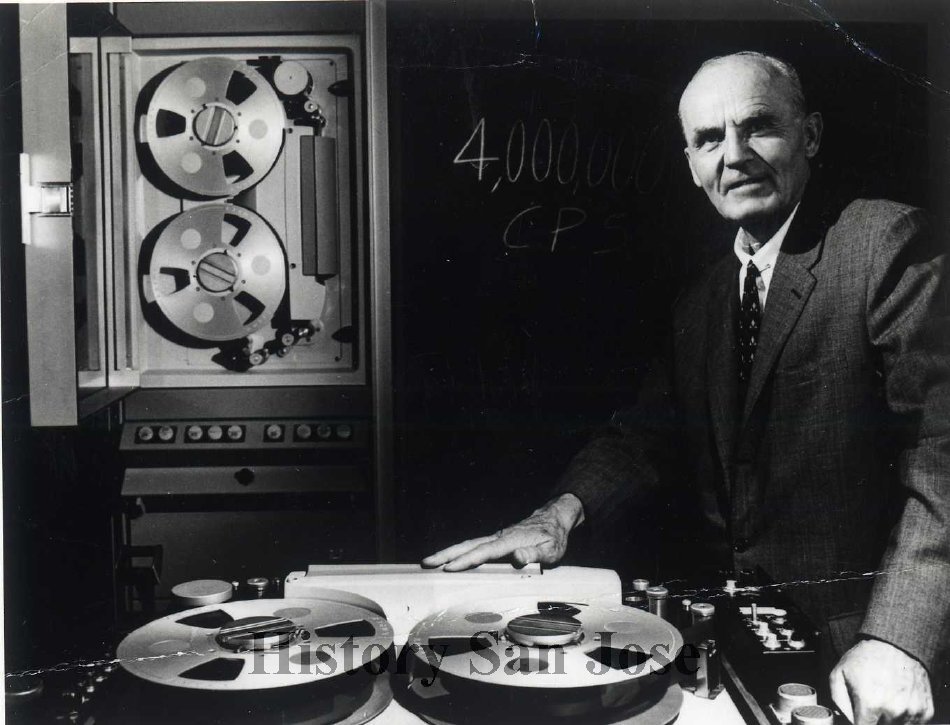
Alexander Poniatoff had cheated death so many times that he had stopped keeping count.
Born in 1892 in the Kazan region of the Russian Empire. Educated as an engineer in Germany, where he learned precision the way Germans teach it: with rigor, repetition, and zero tolerance for error. When the First World War broke out, he returned home and was commissioned into the Russian military, assigned to a fortress at Reval on the Baltic Sea. He trained as a pilot there, learning to fly over the cold Baltic waters, learning what it meant to trust a machine with your life.
The Revolution came before he ever saw combat.
When the Bolsheviks seized power in 1917, Poniatoff found himself on the wrong side of history. Wrong family. Wrong politics. Wrong future if he stayed. He fled east, one step ahead of the Red Army, moving through a country tearing itself apart. He made it to Shanghai. Thousands didn’t.
He worked as an electrical engineer at a power station until civil war found him again. In 1927, he boarded a ship for San Francisco with nothing but his education, his hands, and the knowledge that he could survive anything because he already had.
Three years at General Electric in Schenectady. Four years at Pacific Gas & Electric in San Francisco. Solid jobs. Steady paychecks. The slow suffocation of a man built for harder things.
In 1934, in the pit of the Depression, he quit PG&E and walked into Tomlinson Moseley’s machine shop with an offer that made no sense: he would work for free on a trial basis. If he proved his value, Moseley could put him on the payroll. If not, Moseley owed him nothing.
Moseley was intrigued enough to agree.
Poniatoff’s first project was a defective permanent wave hairstyling machine. A small job. Trivial, even. He fixed it so completely that they patented the improvement together. Moseley split the proceeds.
That told Poniatoff everything he needed to know about the man. They worked together for five years.
Then a patent lawsuit bankrupted Dalmo, and Poniatoff went back to PG&E. Back to the steady paycheck. Back to the slow suffocation.
But Moseley rebuilt. Clawed his way back from nothing the way men like him always did. And when the Navy contracts started flowing, when the radar antenna work arrived, and the problems got hard, he remembered the Russian engineer who could fix anything.
The call came in 1942.
“Do you know anything about radar?” Moseley asked.
Poniatoff admitted he did not.
“Neither do I,” Moseley said. “But I need motors that Westinghouse can’t build, and I think you can build them.”
Attic
Poniatoff took $5,000 of his own savings. Every dollar he had. Moseley added $25,000. They found attic space above the Dalmo-Victor facility in San Carlos, and Poniatoff started hiring.
He named the company after himself: A.M.P. for his initials, plus “ex” for excellence. Around the Dalmo-Victor shop, they had always called him “Dr. AMP.” Now it was official.
The first Ampex workforce fit in a single room. A handful of workers crammed into attic space above a radar antenna factory, summer heat pooling under the roof, building motors by hand on wooden benches. No assembly line. No automation. Just skilled hands and precision instruments, and the knowledge that every motor they built would go to war.
Poniatoff did not believe in organizational charts. He trained people to do their jobs and then trusted them to do them. When the new general manager, a Stanford graduate named Forrest Smith, asked about the management structure, Poniatoff told him there wasn’t one.
Smith pushed back. “There’s no supervision. Everyone is busy as hell, working on their own. Where’s the organizational chart?”
“I have no organizational chart,” Poniatoff replied. “I train people to do something, and that’s the end of it.”
It worked because Poniatoff made it work. He knew every worker by name. Bought birthday cakes for their families. Threw parties when they hit milestones. He built loyalty the old way, by treating people like people and never asking them to do anything he wouldn’t do himself.
“The spirit at the company was terrific,” he said later. “Everybody just wanted to do whatever they could.”
And they delivered.
The azimuth motor spun the dish at exactly 360 RPM. Hour after hour. Day after day. Regardless of temperature swings, vibration, or the stress of combat maneuvering. The elevation motor tilted the spinning assembly up and down at precisely 30 degrees per second, fighting gravity on the upstroke and controlling it on the downstroke. A compact generator, also built in that attic, provided power for the entire system.
Every motor was tested before it shipped. Every motor worked.
Westinghouse had said the tolerances were impossible. General Electric had walked away. A handful of workers in a California attic, led by a Russian immigrant who had survived two revolutions, built the motors that made the Black Widow see.
The Count
The numbers tell the story.
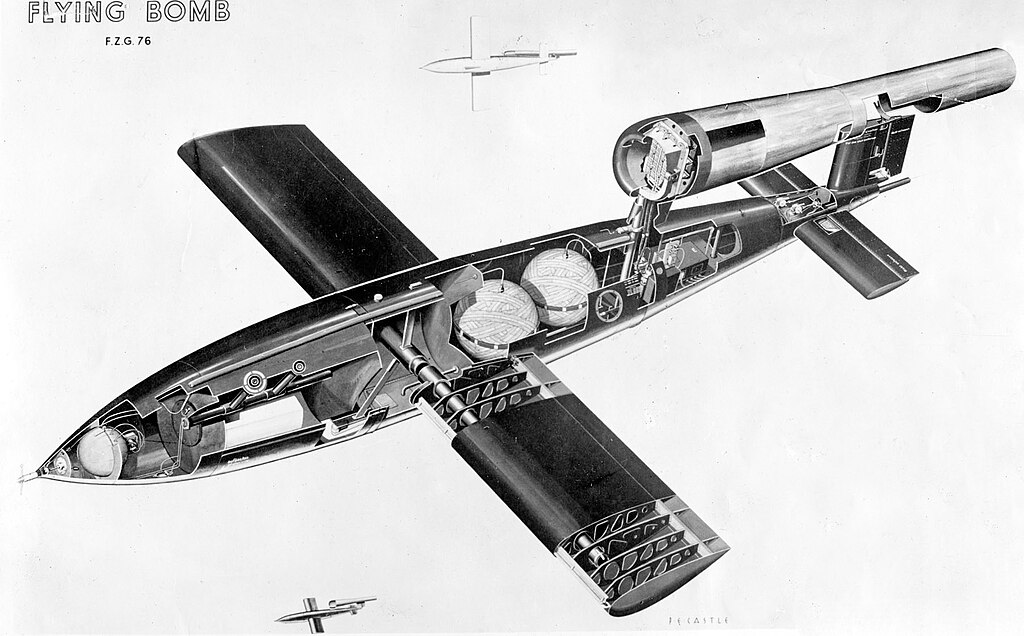
The 422nd Night Fighter Squadron became the highest-scoring American night fighter unit of the war. Forty-three confirmed kills of manned aircraft. Five V-1 flying bombs were intercepted and destroyed. The V-1 was a cruise missile the size of a small aircraft, screaming toward London at 400 miles per hour. Finding one in the dark, matching its speed, and shooting it down before it reached the city required radar, nerve, and motors that didn’t miss a beat.
The 425th NFS added ten confirmed kills over manned aircraft and four more V-1s.
Between them, these two squadrons produced three ace pilots and two ace radar operators. Those radar operators remain the only dedicated radar operator aces in American history. Five kills each, earned not with guns but with a scope and a calm voice calling corrections in the dark.
The Pacific War was different. Longer ranges. Fewer targets. More ocean. But the Black Widow found its prey there, too.
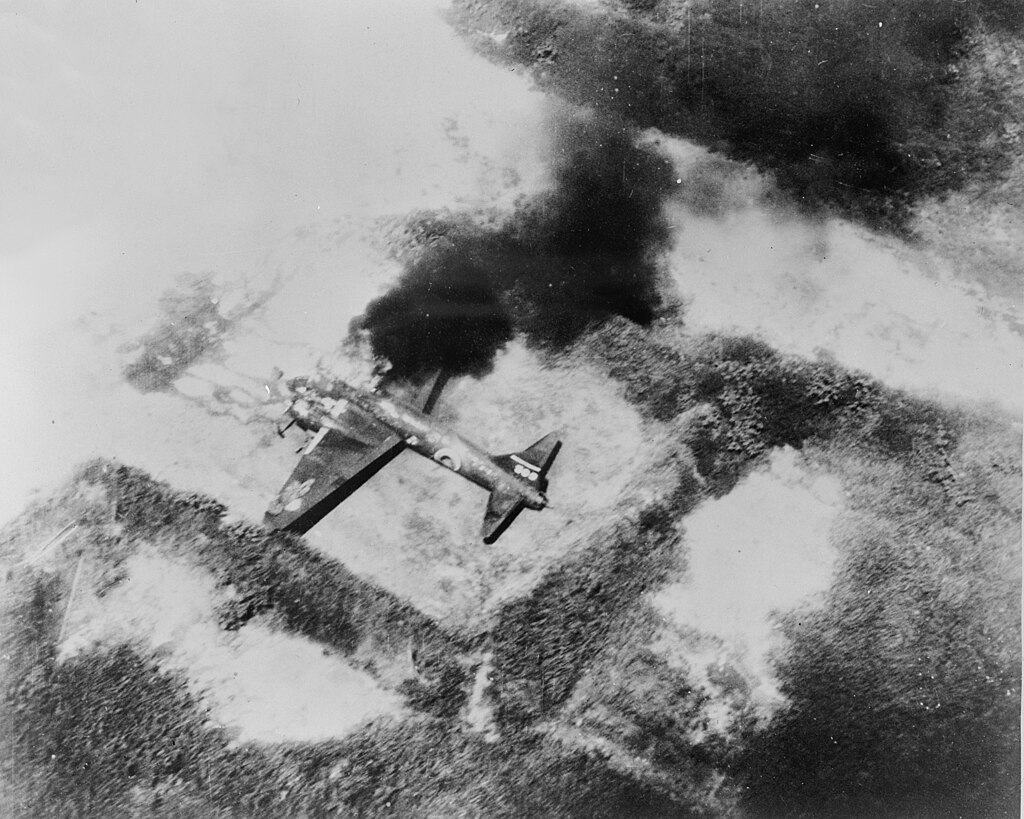
The first P-61 aerial victory came on 30 Jun 1944 over Saipan. A Mitsubishi G4M “Betty” bomber, the same type that had sunk the Prince of Wales and Repulse off Malaya and killed Marines across the Pacific for three years, encountered a crew from the 6th Night Fighter Squadron. The Betty had owned the night since 1941. That night, it was prey.
The 6th NFS finished the war with 16 confirmed kills. Among the highest-scoring American night fighter squadrons in the Pacific.
On 30 Jan 1945, a single P-61 flew a mission unlike any other.
Army Rangers were crawling through the grass toward Cabanatuan, a Japanese prison camp in the Philippines where more than 500 Allied POWs were being held. The rescue plan required a distraction. Something to pull every guard’s eyes away from the perimeter at the critical moment.
The Black Widow came in low, just above the treetops, and began cutting its engines directly over the camp. The aircraft sputtered, shook, and rattled at 1,500 feet, looking for all the world like it was about to crash. The pilot repeated the trick again and again, mixing in aerobatic maneuvers between passes. For twenty minutes, every Japanese soldier in Cabanatuan stared at the sky, waiting for the fireball.
Below, the Rangers reached the wire. The guards never heard them coming.
Over 500 Allied prisoners walked out of that camp alive. It remains one of the most successful POW rescues in American history. The Black Widow that made it possible never fired its guns. It didn’t need to.

Among the last air-to-air kills of the Pacific war belonged to a Black Widow named “Lady of the Dark.”
On the night of 14 August 1945, Captain Lee Kendall and radar operator Lieutenant John Scheerer of the 548th Night Fighter Squadron intercepted a Japanese Ki-44 over the Philippine Sea. In the low-altitude pursuit, the Japanese pilot lost control and crashed into the sea. The Black Widow never fired a shot.
The following night, with the Emperor’s surrender broadcast already recorded, another crew flying the same aircraft found a Ki-44 and chased it to wave-top level. The Japanese pilot threw his aircraft into a final desperate turn. His wingtip touched the water at 300 miles per hour.
Two kills. Zero rounds expended. The Black Widow had become so terrifying that enemy pilots were destroying themselves trying to escape it.
There was no more war after that.
In every one of those kills, from the first Betty over Saipan to the last Ki-44 skipping off the waves, the decisive factor was not the bullet that left the cannon. It was the radar beam that found the target. The spinning dish that painted the darkness. The motor that never stopped turning.
The Telegram
The party at Ampex started the moment the news came through. Japan had surrendered. The war was over. They had won.
Alexander Poniatoff opened a case of champagne he had been saving for this day. Workers who had spent months in that cramped space, building motors by hand, toasted each other with paper cups because there weren’t enough glasses. Someone found a radio and turned it up. Dance music filled the shop for the first time anyone could remember.
They had done it. Every motor they shipped had worked. Every Black Widow that carried their equipment into combat had come home with a radar that functioned. Not one failure. Not one.
Then the telegrams arrived.
War Department. Navy Department. Army Air Forces. Three pieces of paper that said the same thing in different words. All outstanding contracts canceled. All pending orders void. No further deliveries required. Thank you for your service to your country. Your contract is terminated effective immediately.
The music kept playing. Nobody was dancing anymore.
Poniatoff read the telegrams twice. Then he folded them, put them in his pocket, and looked around the room at the people who had built his company. Machinists. Engineers. Assemblers. Men and women who had worked double shifts, weekend shifts, and holiday shifts because the war demanded it, and Poniatoff had asked.
They had families. Mortgages. Kids in school. They had followed him into an attic and built something impossible, and now the thing they had built was no longer needed.
Advisors told him to shut down. He had made good money on the war contracts. He could walk away clean, go back to PG&E, and live out his years in comfort. There was no market for Ampex at all.
Poniatoff had fled Russia with nothing. He had fled Shanghai with nothing. He had started over twice before.
He was not going to abandon the people who had believed in him.
He refused to shut down.
The Pivot
They tried everything.
High-fidelity speakers and amplifiers for the home market. Precision motors for industrial equipment. Contract work for anyone who would pay. A $40,000 order from a furnace manufacturer kept the lights on. Barely.
Poniatoff and Forrest Smith spent months chasing leads that went nowhere. The home audio market was crowded. The industrial motor market was commoditized. Every week, the bank account got a little smaller. Every week, the question got a little louder: how long before they had to start letting people go?
Then Poniatoff attended a meeting of the Institute of Radio Engineers in San Francisco, and everything changed.
A U.S. Army Signal Corps officer named Jack Mullin was demonstrating something impossible.
During the war, Mullin had heard rumors about a German recording device of extraordinary quality. While other officers were shipping home souvenirs, Mullin was hunting through captured German radio stations for a machine most American engineers didn’t believe existed. He found two Magnetophon tape recorders and fifty reels of tape. He shipped them home piece by piece, hidden in mail sacks, against regulations, because he knew what he had.
The Germans had solved magnetic recording. Not the scratchy, noisy magnetic wire that American engineers had tried and abandoned. Real recording. Audio quality so pure that listeners could not distinguish a tape playback from a live broadcast. The trick was something called AC bias, a technique American scientists had tested and rejected years earlier. The Germans had made it work.
Mullin rebuilt the machines with American tubes and electronics. Then he started showing them to anyone who would listen.
Poniatoff listened. The playback filled the room with music that sounded like the musicians were standing in front of him. No hiss. No distortion. No telltale signs that this was a recording at all.
He understood immediately.
A tape recorder is a precision motor problem. The tape has to move past the recording head at exactly constant speed. Any variation, even a fraction of a percent, produces audible flutter and distortion. The tighter the speed tolerance, the better the sound.
Ampex had just spent years building motors that could spin a radar antenna at exactly 360 RPM while a combat aircraft vibrated around them. Motors that held tolerance through temperature swings of 120 degrees. Motors that never failed.
Pulling magnetic tape at exactly 30 inches per second? They could do that in their sleep.
Poniatoff went to Moseley, the man who had believed in him from the beginning. The man who had funded the company. He explained what he had seen, explained what it meant. Asked him to stay in.
Moseley said no.
Tape recording was unproven. The market didn’t exist. The technology might never work outside a laboratory. He pulled his $25,000 investment and walked away.
Poniatoff watched his original backer leave. Then he turned back to his team and told them what they would be building.
Crosby
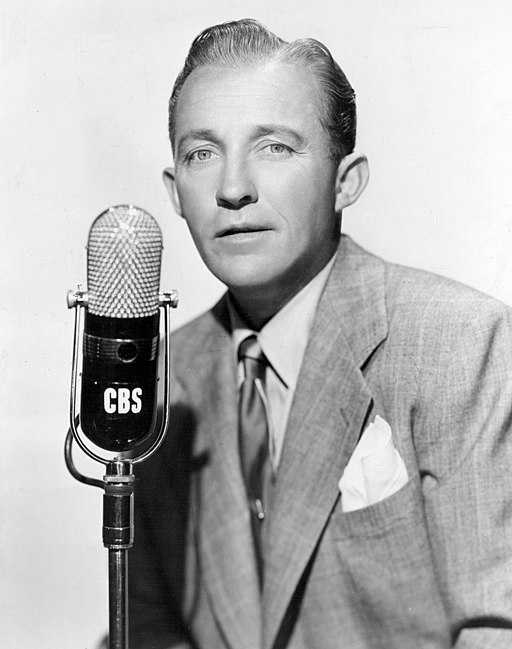
Bing Crosby was the biggest star on the radio, and he hated his job.
Not the singing. Not the fame. Not the money. He hated the schedule.
His show aired live on the East Coast at 8:00 PM. Three hours later, because of time zones, he had to walk back into the studio and perform the entire program again for the West Coast audience. Same jokes. Same songs. Same banter with the same guests. Every single week. There was no way around it. Recording technology in 1946 meant cutting audio onto acetate discs, and disc recordings sounded like disc recordings. Scratchy. Flat. Obviously fake. The networks wouldn’t air them. The sponsors wouldn’t accept them.
So Crosby performed twice a day and dreamed about a technology that didn’t exist.
Then his technical team heard about a small company in California that was trying to build a tape recorder.
Crosby didn’t ask for a business plan. Didn’t request a demo. Didn’t schedule a meeting. Didn’t send lawyers to negotiate terms.
He sent a $50,000 check.

No cover letter. No conditions. Just a check with his signature on it, delivered to Alexander Poniatoff’s desk in San Carlos. Fifty thousand dollars in 1947. Enough to buy a dozen houses. Enough to fund the production of a machine that existed only in blueprints and prototypes.
Poniatoff looked at the check. Looked at his team. And got to work.
The Ampex Model 200A shipped in April 1948. The first two units, serial numbers 001 and 002, went to Jack Mullin, the man who had brought the German technology home in mail sacks. Mullin used them to record the Bing Crosby Show. For the first time in broadcast history, a major radio program aired from magnetic tape.
Crosby never performed twice in one night again.
ABC purchased the next machines. Then NBC. Then CBS. Then Mutual. The networks fought to get their hands on Ampex recorders because the technology was obviously, immediately, transformatively better than anything else available. Then the record labels came calling: Capitol. Columbia. RCA Victor. Decca. Everyone who made a living from recorded sound wanted what Ampex was building.

The broadcast industry didn’t just change. It cracked open and rebuilt itself around the Model 200A.
Radio programs could be edited. A flubbed line could be cut out with a razor blade and spliced back together in minutes. Musicians could record take after take until the performance was perfect. Albums could be assembled from pieces recorded weeks apart. The entire concept of recorded sound shifted from “captured moment” to “constructed art.”
And all of it ran on motors built by a team that had learned precision by building radar systems for night fighters.
The Call
Alexander Poniatoff never forgot where his company came from.
The broadcast business was booming. The Model 200A had made Ampex the name in professional recording. Orders were backlogged for months. The networks were buying. The record labels were buying. Money was flowing in faster than at any point in the company’s history.
Then the Navy called.
It was 1949. The Cold War was accelerating. The weapons that would define the next fifty years were being born at test ranges across the country, and the men responsible for those weapons had a problem.
Rockets and missiles generated data faster than human beings could process. A V-2 test lasted seconds. A guidance system made thousands of calculations per minute. Engineers needed to see exactly what happened during a flight, every parameter, every signal, every moment of a trajectory that might end in success or a fireball on the desert floor.
Film cameras ran out of film. Oscillographs scratched lines on paper, making them difficult to read and impossible to replay. By the time analysts understood what went wrong, the evidence was already degraded or gone.
The Navy needed a machine that could capture high-bandwidth signals in real time and play them back immediately. Full fidelity. No degradation. No waiting.
Could Ampex build it?
Poniatoff could have said no. The company no longer needed military work. The war was over. The broadcast market was more than enough to keep everyone employed and the profits growing. Defense contracts meant security clearances, government paperwork, and specifications written by committees. It meant going back to the world he had left behind when the telegrams came.
He said yes.
Maybe he remembered the attic. Maybe he remembered the workers he had refused to abandon. Maybe he remembered that Ampex existed because the Navy had needed motors that nobody else could build, and Poniatoff had built them.
Or maybe he just understood that some problems are worth solving, and the people who can solve them have an obligation to try.
The Model 500 shipped in 1950.
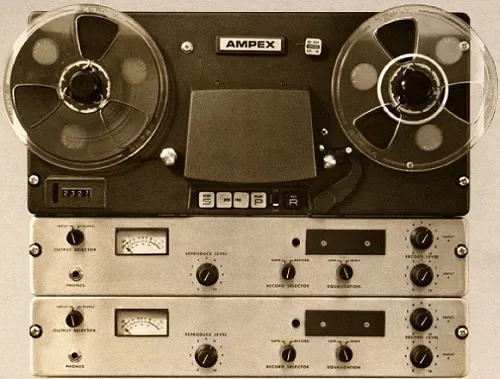
It was the first dedicated instrumentation data recorder that the American military ever purchased. The engineering challenge was brutal: the Navy needed flutter specs lower than anything Ampex had ever attempted. Flutter meant speed variation. Speed variation meant signal distortion. Signal distortion meant bad data. Bad data meant rockets that failed and engineers who couldn’t figure out why.
Ampex engineer Walter Selsted solved it. He developed a capstan drive system that contacted the tape directly at the recording head, eliminating the mechanical slop that caused flutter in conventional designs. The Model 500 achieved flutter specifications that had never been reached before. The lowest of any recorder in the world.
The mission was simple: capture what actually happened and play it back immediately.
No more waiting for the film to be processed. No more squinting at paper traces. The Navy could run magnetic tape through the Model 500 and see the signal exactly as it had been recorded. Rocket telemetry. Radar signatures. Guidance system behavior. Every data point was preserved, repeatable, and analyzable.
White Sands Missile Range needed it for rocket tests. Aberdeen Proving Ground needed it for weapons evaluation. Edwards Air Force Base needed it for flight test. The orders came faster than Ampex could fill them.
The company that had started in an attic building motors for night fighters was back in the defense business. This time, it wasn’t going to leave.
Eighty-Two Years
It is 2026. Eighty-two years since Alexander Poniatoff set up shop in an attic above a radar antenna factory.
The attic is gone. The radar antenna factory is gone. The motors that spun dishes in the noses of Black Widows are museum pieces now, if they survived at all. Magnetic tape gave way to hard drives. Hard drives gave way to solid state. Analog gave way to digital. Data rates climbed from kilobits per second to gigabits, then to tens of gigabits, then to 100 gigabits sustained on a single channel.
Nothing in a modern Ampex system would be recognizable to the engineers who built the Model 200A. The technology has changed so completely that Poniatoff himself would need a week of briefings to understand what his company builds today.
But he would recognize the mission in about ten seconds.
Capture what happens. Preserve it with absolute fidelity. Protect it from loss. Make it available for the people who need it.
That has never changed. That will never change.
The domains have expanded. Air. Land. Sea. Space. The data types have multiplied beyond anything Poniatoff could have imagined.
The company is still employee-owned. Still headquartered in the Bay Area in California. Dozens of its people have been there for more than twenty years. Several have reached forty. At least one met Poniatoff himself as a boy, tagging along with his father, an Ampex engineer. He came back as an adult and never left. The legacy isn’t just in the machines. It’s in the people who are still building them.
In 1950, Ampex delivered the Model 500 to the United States Navy. First dedicated instrumentation data recorder the American military ever purchased.

That was seventy-six years ago.
The company has never stopped. Not for a single year. Not for a single day. Every morning, somewhere in the world, an American warfighter powers up an Ampex system and trusts it to capture data that might save lives, win battles, or prevent wars. Every evening, that system is still running, still recording, still doing exactly what it was built to do.
Alexander Matveevich Poniatoff died on 24 October 1980 in Palo Alto, California. He was eighty-eight years old.
He had fled two revolutions. Crossed an ocean. Started over three times with nothing but his education and his hands. He built a company in an attic that outlived him by nearly half a century, and counting.
The night he fled Russia, he could not have imagined any of this. The night he left Shanghai, he could not have dreamed it. The afternoon he walked into Tomlinson Moseley’s machine shop and offered to work for free, he had no idea that he was taking the first step toward building something that would still be serving American warfighters eight decades later.
But that is what he did.
The tools have changed. The people have changed. The technology has changed so completely that the only constant is the mission itself.
Capture what matters. Protect what matters. Deliver it to the people who need it.
Eighty-two years. Still here. Still building. Still delivering.
When the Black Widow needed eyes to see in the dark, Ampex was there.
When you need to capture what matters, Ampex will be there.
Acknowledgments
This piece would not exist without the “Ampex Old Timers” who have kept our history alive for over eight decades. Their stories, their documents, and their insistence that the next generation understand where we came from made this possible.
Special thanks to Peter Hammar, Bob Wilson, Ted Langdell, and so many others who gave me the idea to put this together. You preserved something worth preserving. This one is for you.